
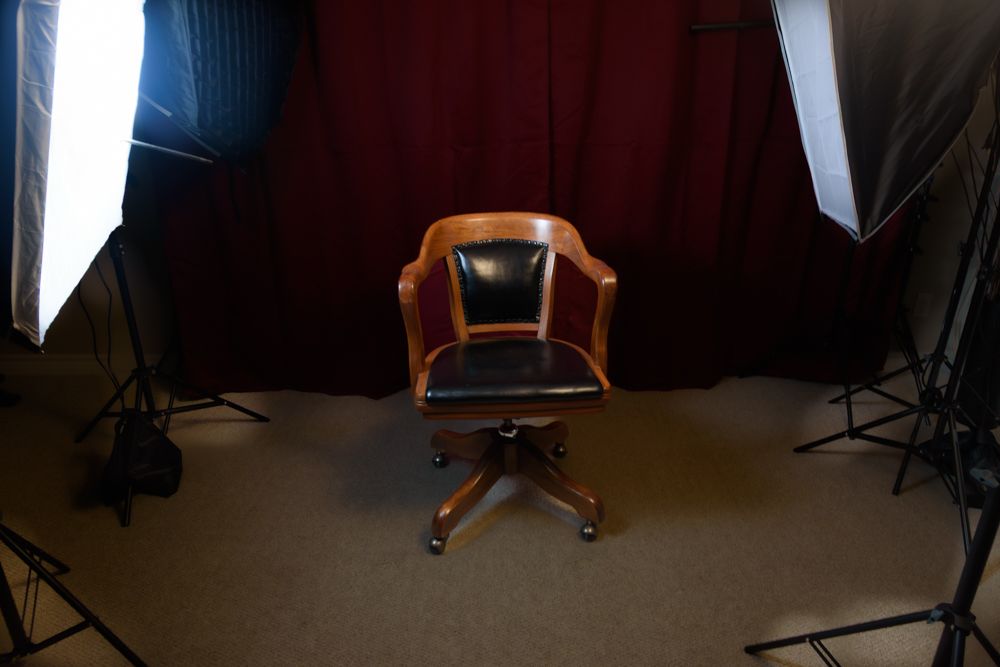
There is a unique kind of silence that settles into a photography studio when the scheduled clients have headed home and the models are unavailable for a creative session. For many in this profession, that silence can feel like a void, but for those of us dedicated to the constant evolution of our craft, it is an invitation. It is a moment to stop looking at others and start looking at the technical and emotional weight of the person behind the lens. To truly understand the art of portraiture, I believe every photographer must, at some point, step out from the safety of the viewfinder and into the unforgiving glare of the lights.
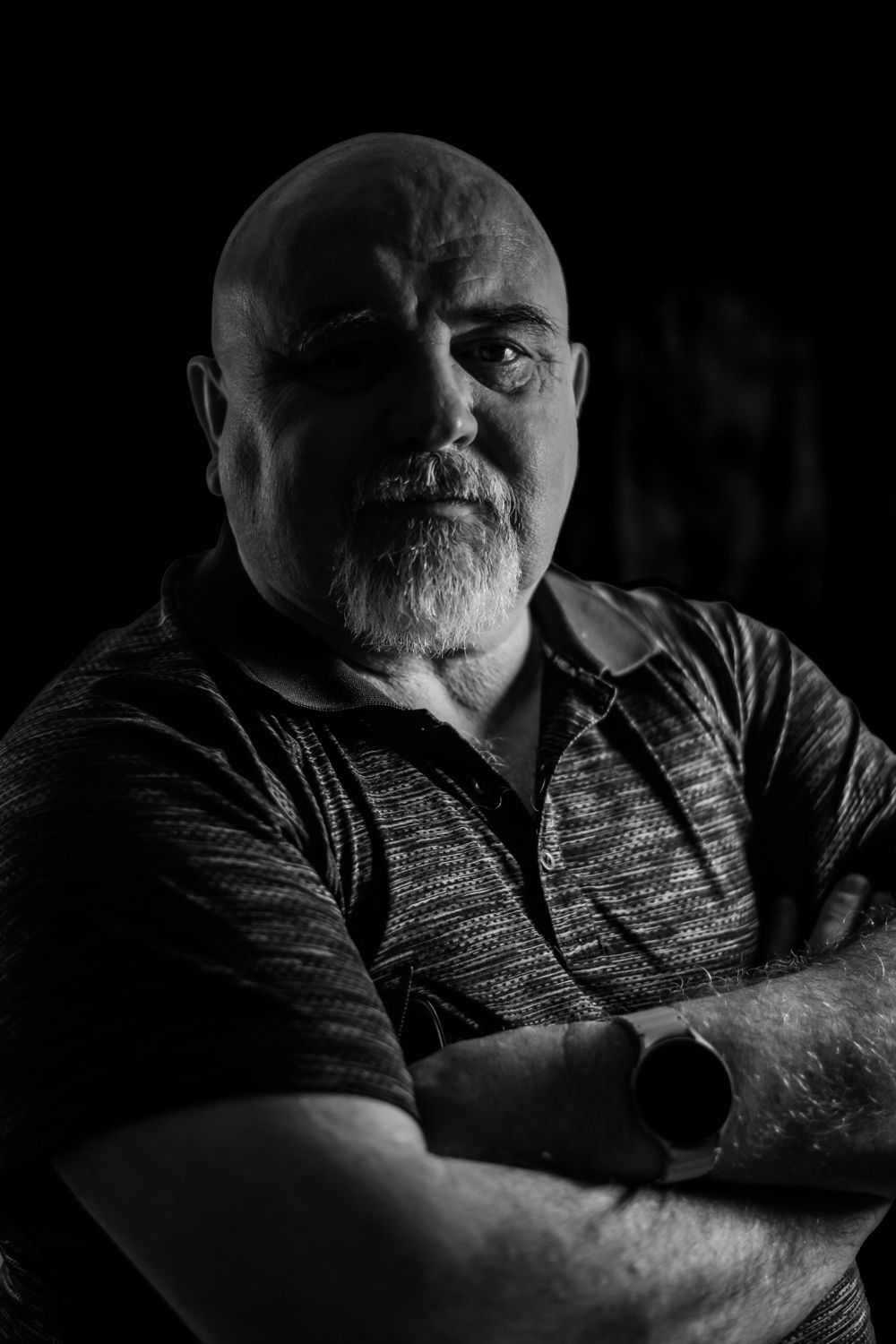
Finding the balance between shadow and light requires a patient eye and a willing subject.
The transition from observer to subject is not as simple as flipping a switch or setting a timer. It is a psychological shift that demands a different kind of presence. When I am working with a client, regardless of their gender or background, my focus is external. I am watching the way a shadow falls across a jawline, or how a slight tilt of the head can change the entire mood of a composition. I am the director, the technical lead, and the cheerleader. However, when I am the one standing in the frame, I am forced to confront the very same vulnerabilities I ask my clients to embrace every single day.
One of the primary reasons I choose to use myself as a model during these quiet periods is to maintain a sharp technical edge. Photography is a language of light, and like any language, if you do not speak it daily, you begin to lose your fluency. By setting up a high contrast, black and white session for myself, I am able to experiment with the nuances of Chiaroscuro lighting without the pressure of a ticking clock or a paying client’s expectations. I can move a key light by two inches, take a test shot, analyze the falloff on my own features, and move it again. This iterative process is where the most profound learning happens. It is a laboratory of light where failure is simply another data point on the road to a better image.
Light does not discriminate. It does not care about gender, age, or status. It simply reveals what is there. By practicing on myself, I am learning how to use light to celebrate the human form in all its diversity. Whether I am carving out a strong, masculine silhouette or softening the light to capture a more delicate grace, the technical principles remain the same. Mastery of these tools allows me to see the beauty in everyone who walks through my door.
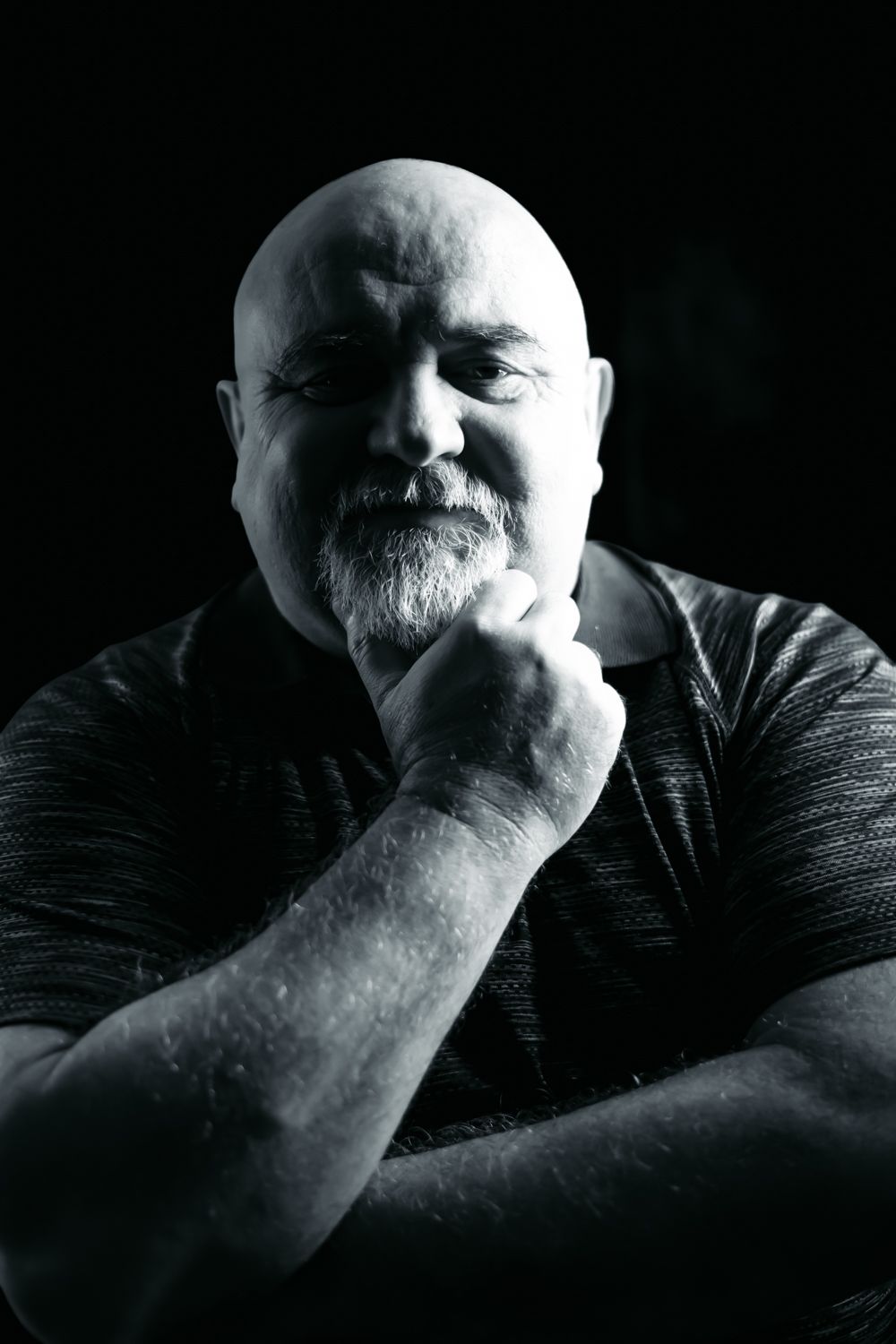
The lens does not just record a face; it confirms the worth of the person standing before it.
In this image where I am resting my chin on my hand, looking directly into the lens, there is a level of introspection that is hard to manufacture. This specific pose was an exercise in capturing thought. I wanted to see if I could portray the weight of experience and the quiet intensity of a creator through a single frame. As I adjusted the strobes to highlight the texture of my beard and the contours of my face, I was reminded of my own philosophy: "I don't photograph who you think you should be; I photograph the magnificent person you already are. The lens simply confirms your worth."
Saying those words to a client is one thing, but believing them when the lens is pointed at yourself is quite another. We are often our own harshest critics. We see the imperfections, the signs of age, or the features we wish were different. By practicing self portraiture, I am forced to apply my own philosophy to myself. I have to look at these images and see the magnificent person instead of the perceived flaws. This practice makes me a much more empathetic photographer for everyone I serve. When a client comes to me feeling nervous or self conscious (feelings that are universal to all humans) I can look them in the eye and truly say that I understand how they feel because I have been exactly where they are standing.
The technical challenges of self portraiture also extend into the realm of equipment mastery. Managing a camera remotely, ensuring focus hits perfectly on the eyes at a wide aperture, and maintaining a natural pose while your mind is racing through shutter speeds and ISO settings is a mental marathon. It forces a level of muscle memory that is invaluable during a high pressure shoot. If I can nail a sharp, well composed portrait of myself while juggling the roles of model and technician, then I can certainly provide a seamless and relaxed experience for any individual who walks through my studio doors.
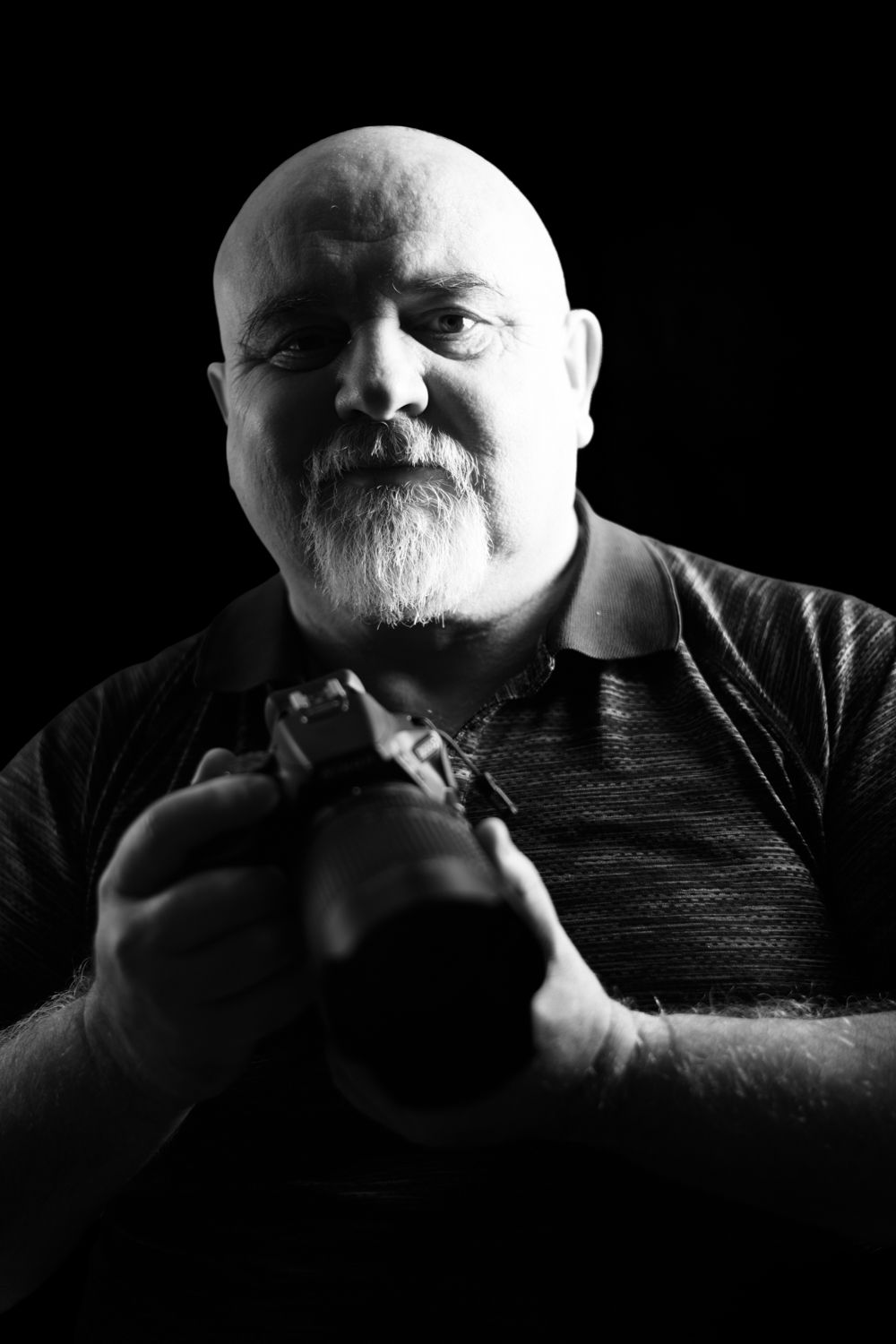
The tools of the trade are an extension of the photographer, even when the roles are reversed.
The third image, where I am holding my camera, serves as a bridge between my two worlds. It represents the duality of being both the creator and the creation. In the world of portraiture, there is often a struggle to find a balance between strength and vulnerability. Many people walk into a studio with a mask, a version of themselves they think the world wants to see. Through these self modeling sessions, I am exploring how to break those barriers down for every person I photograph. I am trying to see what it is like from a client's perspective so that I can better guide them toward a sense of confidence and self acceptance.
If I am asking a person to trust me with their image, to show their true self to my camera, I must be willing to do the same. This is not about vanity; it is about authenticity. It is about proving that the studio is a safe space for everyone, including the person who owns it. Each time I step in front of that light, I am refining the experience for the next person who sits in that chair. I am learning which cues work, which directions are confusing, and how to create an environment where the magnificent person can finally emerge.
The practice of using oneself as a model is a journey toward a deeper understanding of the photographic art form. It is a reminder that the most important tool in my kit is not the camera, the lens, or the expensive lighting setup. The most important tool is empathy. By constantly challenging myself and putting myself in the hot seat, I ensure that my work at Rab Carrigan Photography remains grounded in human connection.
Whether the studio is filled with a bustling crew or it is just me and my tripod in the quiet of a Tuesday afternoon, the goal remains the same. I am always searching for the truth. I am always looking for that split second where the light and the soul align. Through self portraiture, I have found that the lens is not just a window into the world; it is a mirror that reflects our shared humanity. It tells us that we are enough, just as we are, and that every single one of us is worthy of being seen. This inclusive approach to light and shadow allows me to honor every client, ensuring they leave the studio knowing that their unique beauty has been captured and validated.